
A Complete Year-Round Safari Guide From Grace of Africa
If you are planning a safari in South Africa, one question always comes first:
When is the best time to visit Kruger National Park?
The honest answer is simple, there is no single best time.
Because Kruger is not a seasonal attraction.
It is a living ecosystem that changes completely between summer and winter, offering two entirely different safari experiences throughout the year.
At Grace of Africa, located just minutes from the southern gates, this is not theory, it is lived reality.
The Southern Kruger Park Advantage
The southern region of Kruger is one of the most biologically rich areas in Africa.
What makes it unique is the combination of habitats within a relatively small radius:
- Permanent river systems
- Seasonal drainage lines
- Open savannah plains
- Dense bushveld and thickets
- Rocky outcrops and koppies (Berg-en-Dal region)
- The Crocodile River and Sabie River ecosystem
This is one of the most wildlife-dense regions in Kruger National Park.
The Dry Season
May to October — Peak Wildlife Visibility
This is the most reliable and visually rewarding safari period.
Climate Conditions
- Cool to fresh mornings
- Warm, dry afternoons
- Cooler evenings
- Temperatures typically between 20°C and 30°C
Wildlife becomes active early and adjusts quickly to rising temperatures.
Wildlife Behaviour
- Big cats hunt mainly at night and early morning
- Activity often continues until around 09:00–10:00
- After that, predators rest in shade
- Herbivores graze more openly in visible areas
Behaviour is seasonal but always natural and instinct driven.
General Game Movement
- Wildlife concentrates around permanent water sources
- Reduced vegetation improves visibility
- Movement becomes more predictable along river corridors
Crocodile River System Impact
The Crocodile River is one of the strongest wildlife magnets in southern Kruger.
During the dry season:
- Cape buffalo herds of 300–600 individuals
- Elephant herds of between 20–50 in a family group regularly observed
- Zebra, giraffe, wildebeest, and impala gather in large numbers
This creates some of the most consistent game viewing opportunities in Africa.
Predators Of Kruger Park Dynamics
- Lions patrol river corridors and open plains
- Leopards use dense bush and riverine cover
- Hyenas follow herd movement patterns and goes deeper
Sightings often feel like real-time wildlife documentaries unfolding naturally.
The Green Season
November to April — The Season of Transformation
This is when Kruger becomes lush, green, and dramatically alive.
Climate Conditions
- Warm to hot mornings
- Humid throughout the day
- Midday temperatures often between 30°C and 45°C
- Warm, humid evenings
Rainfall increases but remains irregular and natural.
Daily Safari Rhythm
- Early mornings = best viewing conditions
- Midday = rest and shade behaviour
- Late afternoon = renewed movement before night
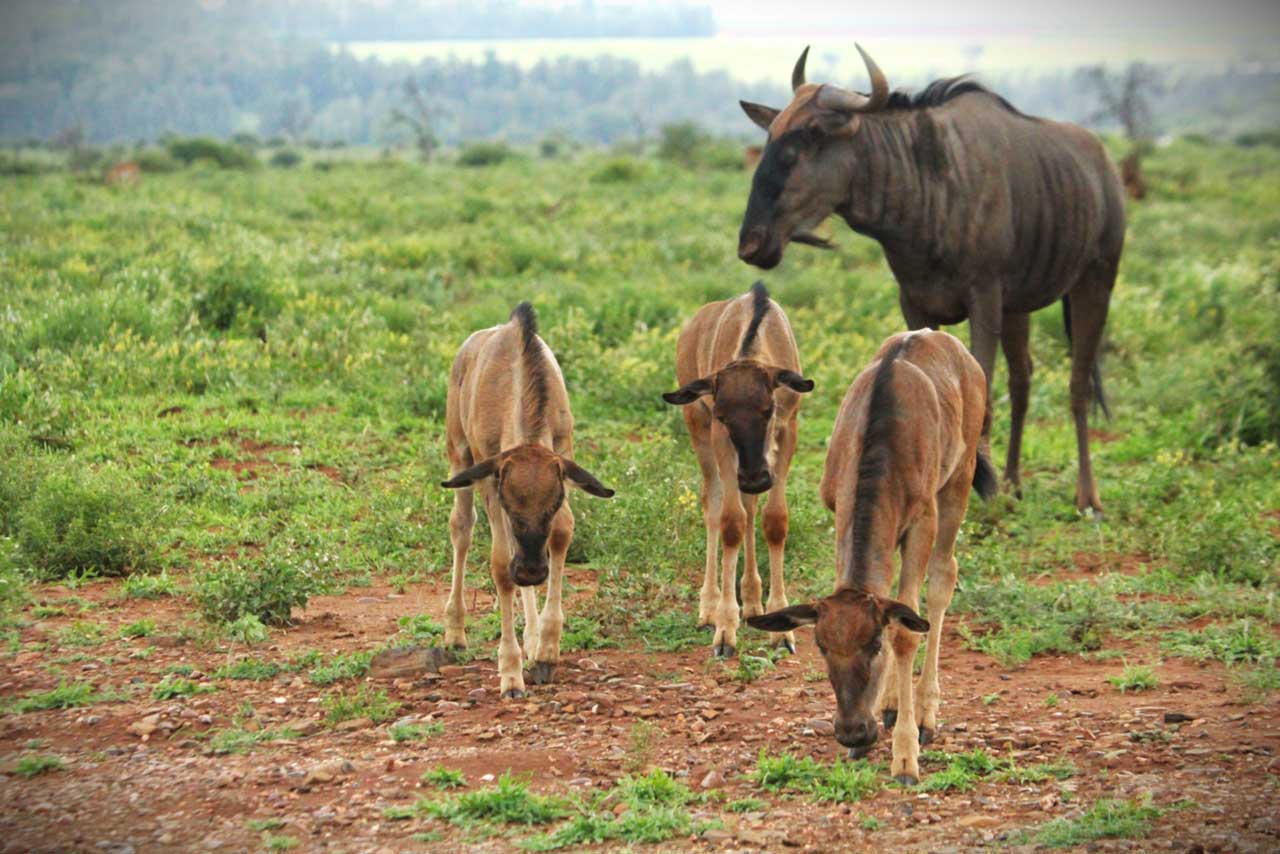
Wildlife Calving Season
After the first rains, new life emerges across the ecosystem:
- Impala lambs
- Wildebeest calves
- Zebra foals
- Widespread herbivore births
- Lastly the big cats too can fall in this time getting to admire cuteness.
This increases predator-prey interactions and creates dynamic movement across the bush.
Bird Migration Season
Kruger becomes a global birding hotspot:
- Over 550 bird species recorded
- Migratory birds return from Europe and Asia
- Woodland Kingfisher becomes a signature sound of summer
- Wetlands and rivers become highly active ecosystems
November — The Transition Month
November marks a critical shift:
- Shoulder season moving into summer peak
- Wildlife spreads widely across the landscape
- Park feels quieter due to its vast size
- Movement patterns begin changing with rainfall
Down south, even small areas can overlap multiple predator territories.
Sightings are never naturally congested unless influenced by human density.
Kruger Safari Reality
It is important to understand:
- Wildlife is not controlled
- Movement is not predictable
- Sightings are never guaranteed
Experienced guiding improves probability but nature always leads.
Kruger is not a zoo. It is a free, living wilderness.
Southern Kruger Park Biodiversity
The southern region offers exceptional habitat variation:
- Rivers and drainage systems
- Open savannah plains
- Dense bushveld
- Rocky koppies and elevated terrain
- Mixed vegetation zones
This creates overlapping predator territories and high species diversity.
Grace of Africa Boutique safari Lodge Positioning
Grace of Africa is ideally located near key southern entry points:
- Crocodile Bridge Gate — 15 minutes
- Malelane Gate — 35 minutes
This allows:
- Fast access into high-density wildlife zones
- Maximum time spent on safari
- Continuous connection to surrounding wilderness systems
Guests also experience free-roaming wildlife movement around the broader lodge environment.
Kruger National Park Seasonal Summary
Dry Season (May–October)
- Best visibility
- Concentrated wildlife
- Reliable Big 5 sightings
- Strong river-based game viewing
Green Season (November–April)
- Lush landscapes
- Birding peak season
- Birth and breeding cycles
- Atmospheric and dramatic safari conditions
The best time to visit Kruger National Park depends entirely on the type of experience you want.
But one truth remains consistent:
Kruger is not defined by seasons, it is defined by experience.
And the southern region offers one of the most complete wildlife systems in Africa, where rivers, habitats, and predator territories naturally intersect.
At Grace of Africa, this ecosystem is not something you visit.
It is something you experience.
Your Frequently Asked Questions
Q: Is Marloth Park inside Kruger National Park?
A: No. Marloth Park is located just outside the Kruger boundary along the Crocodile River. It is a wildlife estate where animals roam freely, offering a bush experience without the gate curfews or crowds of the main rest camps.
Q: Which gate is closest to Grace of Africa?
A: Grace of Africa is about 10–15 minutes from Crocodile Bridge Gate and roughly 35 minutes from Malelane Gate. Both provide easy access to excellent game-viewing routes inside Kruger.
Q: Do I need a 4x4 vehicle to reach Grace of Africa or Marloth Park?
A: No. All main routes to Grace of Africa are fully tarred and accessible by standard vehicles. You do not need a 4×4, even during the rainy season.
Q: When is the cheapest time to book a Kruger safari?
A: The most cost-effective times are during the off-peak or shoulder seasons (outside school holidays and festive season). Lodges often release specials such as Stay 3, Pay 2 or discounted long-stay rates during these months.
Q: Does Grace of Africa offer both self-catering and all-inclusive options?
A: Yes. Guests can choose Luxury Self-Catering Suites with full kitchens or upgrade to All-Inclusive Packages that include meals, guided safaris, and romantic extras such as private bush dinners.
Q: What makes Grace of Africa different from other self-catering lodges near Kruger?
A: Grace of Africa stands out for its five-star grading, daily housekeeping, personal butler service, and prime location overlooking one of Marloth Park’s largest parklands. It combines privacy, convenience, and authentic bush luxury that most standard self-catering units simply cannot match.